

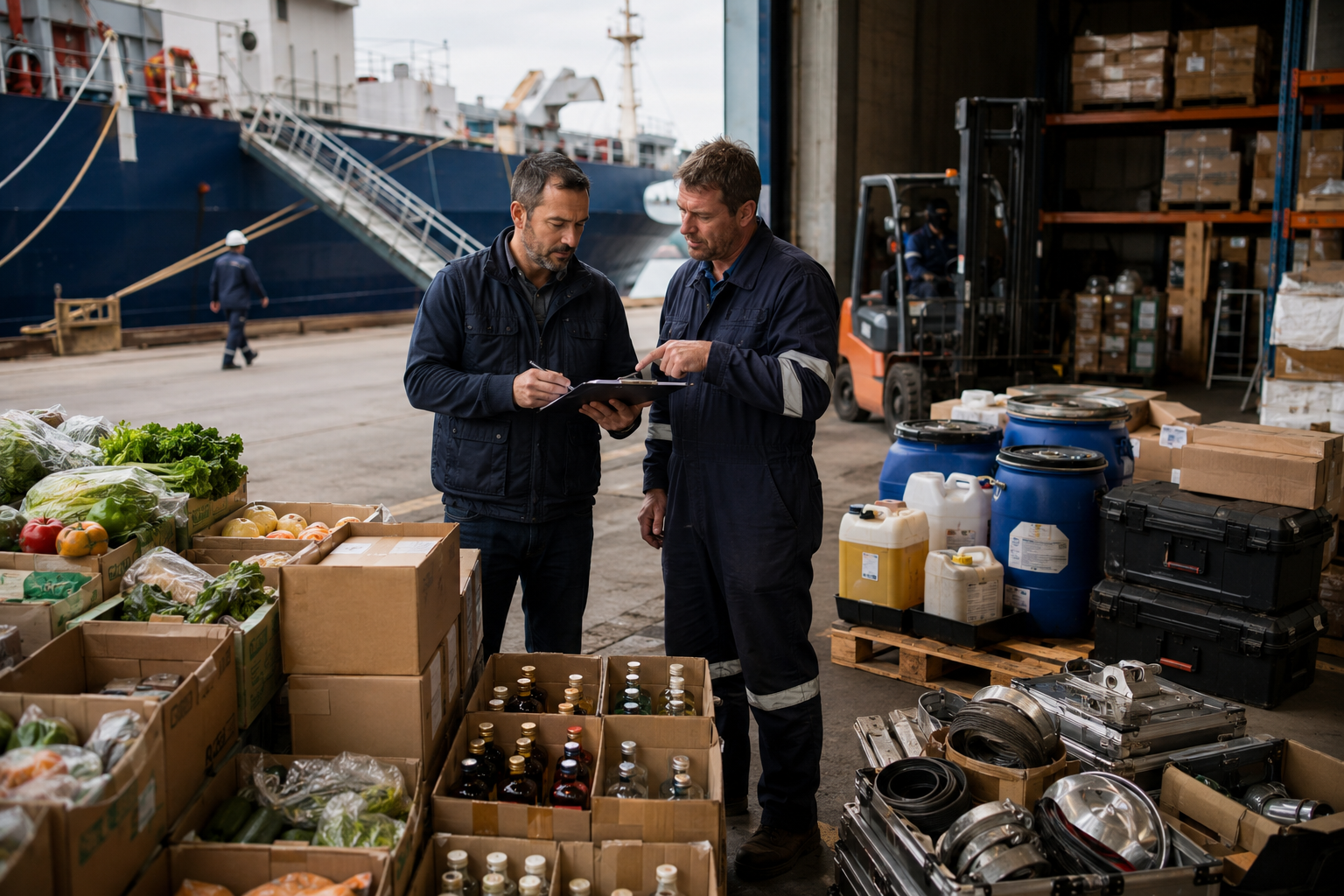
Category Management in Ship Supply: Segmenting Provisions, Bonded, Technical and Chemicals
Ship supply is not a single purchasing activity. A vessel may need provisions, bonded stores, deck consumables, engine spares, cabin items, chemicals, safety equipment and urgent technical materials within the same procurement cycle. Each category has different cost drivers, compliance requirements, supplier risks and delivery constraints.
This is why category management in ship supply matters. Instead of treating all vessel requirements as one general purchasing list, procurement teams segment spend into clear categories and manage each category with the right sourcing strategy, documentation process and performance KPI.
For procurement directors, category managers and ship managers, this approach improves cost control, supplier performance, compliance visibility and operational reliability.
AVS Global Ship Supply & Catering supports ship managers, vessel operators and procurement teams with global ship supply, provisions, technical stores, bonded stores, marine chemicals and coordinated vessel supply solutions across international ports.
For category-based vessel supply support, visit Provisions Supply, Technical Stores or submit a request through Quick Quote.
Why Category Management Matters in Ship Supply
Category management is the practice of grouping similar purchasing needs into defined categories and managing each category with a specific strategy. In marine procurement, this is especially important because vessel supply combines operational urgency with technical complexity.
A single vessel requisition may include:
- Fresh food and frozen provisions
- Bonded stores
- Deck consumables
- Engine room materials
- Cabin and hotel supplies
- Cleaning products
- Marine chemicals
- Safety-related items
- Technical spares
- Lubricants and consumables
If all of these are managed with the same sourcing logic, the procurement team loses visibility. A supplier may be suitable for provisions but not for chemicals. A strong technical stores supplier may not be suitable for bonded items. A low-cost offer may create compliance risk if documents are missing.
Category management helps procurement teams answer key questions:
- Which categories drive the highest spend?
- Which categories create the highest operational risk?
- Which suppliers perform best by category?
- Which items need certificates or Safety Data Sheets?
- Which categories should be consolidated?
- Which categories require local delivery?
- Which categories should be covered by frame agreements?
- Which categories need stricter quality control?
The goal is not only to buy cheaper. The goal is to buy smarter, with better control over cost, compliance and vessel readiness.
Defining Categories: Provisions, Bonded, Deck, Engine, Cabin, Chemicals
The first step in a marine category strategy is defining practical categories. These categories should be clear enough for reporting but not so detailed that the system becomes difficult to manage.
A good category structure usually reflects how vessels operate, how suppliers specialize and how compliance requirements differ.
Provisions
Provisions include food, beverages and galley-related supply used for crew catering. This category may include fresh, frozen, chilled and dry products.
Typical examples include:
- Fresh fruits and vegetables
- Meat, poultry and seafood
- Dairy products
- Dry stores
- Frozen products
- Bakery items
- Beverages
- Galley consumables
Provisions are strongly connected to crew welfare, nutrition, food safety and shelf life. Procurement teams should track supplier freshness, delivery reliability, cold chain discipline and complaint rates.
For more information, see Provisions Supply.
Bonded Stores
Bonded stores are controlled items supplied under specific customs and regulatory conditions. They may include certain duty-free or restricted products depending on port, flag, company policy and applicable law.
This category should be managed separately because bonded items often require stricter documentation and controlled handling.
Key considerations include:
- Customs requirements
- Storage and handling rules
- Delivery documentation
- Product restrictions
- Port-specific procedures
- Crew entitlement and vessel policy
For a dedicated overview, see Bonded Stores.
Deck Stores
Deck stores support day-to-day deck operations, maintenance and safety. This category often includes consumables that are used frequently but may also include critical operational items.
Typical examples include:
- Ropes and mooring lines
- Shackles and fittings
- Paint tools
- Cleaning materials
- Brushes and rollers
- Tarpaulins
- Safety consumables
- Lashing materials
Deck stores require supplier reliability, correct specifications and consistent availability. For some items, certification and traceability may also matter.
Engine Stores
Engine stores include consumables, tools and technical materials used by the engine department. This category often requires closer technical review than general stores.
Examples include:
- Filters
- Gaskets
- Valves
- Bearings
- Pumps
- Tools
- Engine consumables
- Measuring instruments
- Workshop materials
For engine-related categories, procurement teams should pay attention to part numbers, maker references, compatibility, certificates, warranty terms and superintendent approval.
Cabin and Hotel Stores
Cabin and hotel stores support crew accommodation, hygiene and daily living standards onboard. These items may not always be technically complex, but they affect crew comfort and vessel standards.
Examples include:
- Bedding
- Towels
- Cleaning supplies
- Hygiene products
- Laundry items
- Cabin consumables
- Tableware
- Housekeeping materials
This category is often suitable for standardization and frame agreements because many items repeat across vessels.
Marine Chemicals
Marine chemicals require careful handling, documentation and compliance control. Unlike general stores, chemicals may need Safety Data Sheets, product compatibility checks and storage instructions.
Examples include:
- Cleaning chemicals
- Boiler water treatment chemicals
- Fuel additives
- Cooling water treatment products
- Degreasers
- Paint-related chemicals
- Specialty maintenance chemicals
Chemicals should never be treated as basic consumables. Incorrect selection or missing documentation can create safety, compliance and operational problems.
For related guidance, see Marine Chemicals.
Spend Analysis and Pareto Distribution per Category
Once categories are defined, procurement teams should analyze spend by category. This helps identify where cost savings, supplier consolidation, compliance improvements or process changes can create the most value.
A common method is Pareto analysis. In many procurement environments, a small number of categories or suppliers account for a large share of total spend. Marine procurement teams can use this logic to prioritize action.
What to Analyze
Spend analysis should not only look at total cost. It should also include frequency, urgency, supplier base, port location and claim history.
Useful analysis points include:
- Annual spend by category
- Monthly spend variation
- Number of purchase orders per category
- Number of suppliers per category
- Average order value
- Emergency purchase frequency
- Freight cost by category
- Customs cost by category
- Rejection or complaint rate
- Delivery delay frequency
- Certificate or documentation issue rate
This gives procurement teams a more complete view of category performance.
Pareto Distribution in Ship Supply
A Pareto view may show that a few categories create most of the spend or most of the operational problems.
For example:
- Provisions may create high frequency and high volume.
- Technical stores may create high value and urgent risk.
- Chemicals may create lower spend but higher compliance sensitivity.
- Bonded stores may create documentation and customs complexity.
- Deck stores may create recurring operational demand.
The purpose of Pareto analysis is to avoid treating all categories equally. High-spend and high-risk categories deserve stronger category ownership, supplier management and KPI tracking.
Cost and Risk Matrix
A useful category management tool is a cost and risk matrix. Categories can be mapped based on financial impact and operational risk.
For example:
- High cost / high risk: technical spares, critical engine stores
- High cost / lower risk: planned provisions, standardized cabin stores
- Lower cost / high risk: chemicals, safety consumables, urgent items
- Lower cost / lower risk: routine consumables
This helps procurement leaders decide where to focus supplier negotiations, frame agreements, inventory planning and compliance checks.
Different Sourcing Strategies per Category
Each category should have its own sourcing strategy. A single procurement approach cannot work equally well for provisions, bonded stores, technical spares and chemicals.
Provisions Strategy
For provisions, the main priorities are freshness, food safety, delivery reliability, shelf life and crew satisfaction.
A strong provisions strategy may include:
- Approved food suppliers
- Cold chain controls
- Seasonal product planning
- Crew nationality and dietary considerations
- Complaint tracking
- Freshness checks
- Delivery temperature records
- Standard menu or provision list support
Price matters, but poor-quality provisions can affect crew welfare and generate complaints.
Bonded Stores Strategy
Bonded stores require controlled sourcing and careful documentation. Supplier selection should consider regulatory knowledge, customs experience and delivery discipline.
A bonded strategy may include:
- Approved bonded suppliers
- Port-specific compliance checks
- Clear documentation requirements
- Controlled product lists
- Customs coordination
- Delivery records
- Crew entitlement verification where applicable
This category should be managed with stronger control than general stores.
Technical Stores Strategy
Technical stores and spares often require technical approval. The cheapest offer may not be acceptable if the item is incompatible, uncertified or not aligned with maker specifications.
A technical stores strategy may include:
- Maker or OEM reference control
- Part number validation
- Superintendent approval
- Certificate requirements
- Warranty review
- Critical spare planning
- Approved substitute rules
- Supplier capability assessment
For high-value or critical technical stores, supplier qualification is more important than basic price comparison.
Chemicals Strategy
Chemicals require a compliance-led sourcing approach. Safety Data Sheets, product compatibility and handling instructions are essential.
A chemicals strategy may include:
- SDS collection and review
- Product compatibility checks
- Storage and segregation requirements
- Crew safety instructions
- Regulatory restrictions
- Approved chemical list
- Supplier technical support
- Packaging and labeling checks
Chemicals should be categorized and controlled separately because they create safety and compliance exposure.
Cabin and Deck Stores Strategy
Cabin and deck stores often benefit from standardization. Many items repeat across vessels, which creates an opportunity for frame agreements and catalog-based buying.
A strategy may include:
- Standard item lists
- Preferred supplier agreements
- Volume-based pricing
- Quality benchmarks
- Delivery performance tracking
- Product substitution rules
- Port-level availability checks
Standardization reduces unnecessary variation and helps procurement teams compare suppliers more effectively.
Documentation and Compliance per Category
Documentation requirements differ significantly between categories. A strong category management model defines what documents are needed before procurement, at delivery and after completion.
Provisions Documentation
Provisions may require:
- Delivery notes
- Invoices
- Product lists
- Expiry dates
- Temperature records
- Hygiene certificates where applicable
- Country or port-specific documents
- Complaint and rejection records
For fresh, frozen or chilled products, cold chain documentation may also be required.
Bonded Stores Documentation
Bonded stores may require:
- Customs documents
- Bonded delivery records
- Vessel declaration support
- Product lists
- Quantity confirmation
- Port authority or customs-related records
- Controlled handover documentation
Because bonded goods are sensitive to customs rules, documentation discipline is essential.
Technical Stores Documentation
Technical stores may require:
- Maker or part number details
- Certificates
- Test reports
- Material declarations
- Warranty documents
- Technical datasheets
- Delivery notes
- Installation or acceptance records where applicable
For class-related or safety-critical items, missing documentation may cause delays or additional inspection.
Chemicals Documentation
Chemicals may require:
- Safety Data Sheet
- Product technical datasheet
- Labeling information
- Storage instructions
- Dangerous goods information where applicable
- Compatibility guidance
- Delivery note
- Certificate of analysis where relevant
Chemical documentation should be checked before the product reaches the vessel, not after delivery.
Performance KPIs per Category
Category management needs measurable performance indicators. Without KPIs, procurement teams cannot see whether category strategies are working.
Each category should have KPIs that match its risk and operational purpose.
Cost KPIs
Cost KPIs may include:
- Spend by category
- Savings by category
- Price variance
- Freight cost per category
- Emergency purchase cost
- Supplier consolidation rate
- Contract compliance rate
These KPIs help procurement teams understand where money is spent and where savings are realistic.
Delivery KPIs
Delivery KPIs may include:
- On-time delivery rate
- Delivery accuracy
- Order cycle time
- Missed delivery rate
- Lead time by category
- Port delivery success rate
- Urgent order response time
Delivery KPIs are especially important for JIT supply and remote port operations.
Quality KPIs
Quality KPIs may include:
- Rejection rate
- Complaint rate
- Product non-conformance
- Missing certificate rate
- Wrong item delivery rate
- Damaged item rate
- Warranty claim frequency
These KPIs show whether cost savings are creating hidden quality problems.
Compliance KPIs
Compliance KPIs may include:
- SDS availability for chemicals
- Certificate completeness
- Cold chain record availability
- Bonded documentation accuracy
- Supplier approval status
- Audit findings
- Correct invoice and delivery note matching
Compliance KPIs are especially important for bonded stores, chemicals, provisions and safety-related items.
Supplier KPIs
Supplier KPIs may include:
- Performance by category
- Quote response time
- Lead time accuracy
- Claim handling speed
- Documentation accuracy
- Emergency support capability
- Port coverage strength
Tracking suppliers by category helps procurement teams avoid broad assumptions. A supplier may be excellent in one category and weak in another.
How AVS Supports Category-Based Procurement
AVS supports category-based procurement by helping ship managers and procurement teams organize vessel supply requirements across different product groups.
AVS can support:
- Provisions supply
- Technical stores
- Bonded stores
- Marine chemicals
- Deck and engine stores
- Cabin and hotel stores
- Urgent supply requirements
- Multi-port coordination
- Supplier communication
- Delivery planning
- Documentation support
Category-based procurement works best when product scope, delivery requirements, documentation expectations and supplier responsibilities are clear from the beginning.
For vessel supply requests, use Quick Quote.
Conclusion: Category Management Makes Ship Supply More Controlled
Category management in ship supply helps procurement teams move from reactive purchasing to structured procurement control. By segmenting provisions, bonded stores, technical stores, chemicals and other vessel supply categories, ship managers can improve cost visibility, supplier performance and compliance discipline.
The key is not to overcomplicate the category model. Start with practical categories, analyze spend, define sourcing strategies, standardize documentation and track performance with clear KPIs.
For marine procurement teams managing multiple vessels, ports and product groups, category management is not only a reporting tool. It is a practical framework for better vessel readiness, stronger supplier control and smarter procurement decisions.
AVS Global Ship Supply & Catering supports ship supply categories across provisions, technical stores, bonded stores, marine chemicals and coordinated global vessel supply.
FAQ
What is category management in marine procurement?
Category management in marine procurement means grouping similar vessel supply needs into defined categories and managing each category with its own sourcing strategy, supplier base, documentation process and performance KPIs.
How many categories should a ship manager track?
There is no fixed number. A practical ship manager may track provisions, bonded stores, deck stores, engine stores, cabin stores, chemicals, safety items and technical spares. The category structure should be detailed enough for control but simple enough for daily use.
Are bonded stores a separate category?
Yes, bonded stores should usually be treated as a separate category because they often involve customs controls, restricted products, specific documentation and port-dependent procedures.
How does spend analysis identify priority categories?
Spend analysis shows which categories create the highest cost, highest order volume, highest emergency spend or highest supplier dependency. This helps procurement teams focus on the categories that have the greatest financial or operational impact.
Should provisions and technical stores use the same suppliers?
Not always. Provisions and technical stores require different capabilities. A provisions supplier must manage freshness, food safety and delivery timing, while a technical stores supplier must manage specifications, certificates, part numbers and compatibility.
What is the role of frame agreements per category?
Frame agreements can standardize pricing, terms, service levels and documentation requirements for recurring category demand. They are especially useful for provisions, cabin stores, deck consumables and frequently ordered technical items.
Can categories be combined for cost savings?
Yes, some categories can be combined for freight savings, consolidated delivery or supplier efficiency. However, compliance-sensitive categories such as chemicals, bonded stores or critical technical items should not be combined without proper control.
How does AVS support category-based procurement?
AVS supports category-based procurement by coordinating provisions, technical stores, bonded stores, marine chemicals and other vessel supply categories across international ports, with attention to supplier communication, delivery planning and documentation needs.
What compliance differs between categories?
Provisions may require food safety and cold chain records. Chemicals may require Safety Data Sheets and handling instructions. Bonded stores may require customs documents. Technical stores may require certificates, test reports or maker references.
How are emerging categories like cyber spares handled?
Emerging categories such as cyber spares should be defined separately when they have different suppliers, risk profiles, documentation needs or approval workflows. They may include network equipment, access control devices, sensors, software-related hardware and OT system components.
Should category managers exist in small ship managers?
Even small ship managers can benefit from category ownership. A formal category manager may not be required, but someone should be responsible for category spend, supplier performance, documentation quality and standardization.
How do categories map to IMPA sections?
Many ship managers map internal categories to IMPA sections or catalog codes to improve item identification, supplier comparison and reporting. The mapping should support procurement control rather than create unnecessary administrative complexity.