

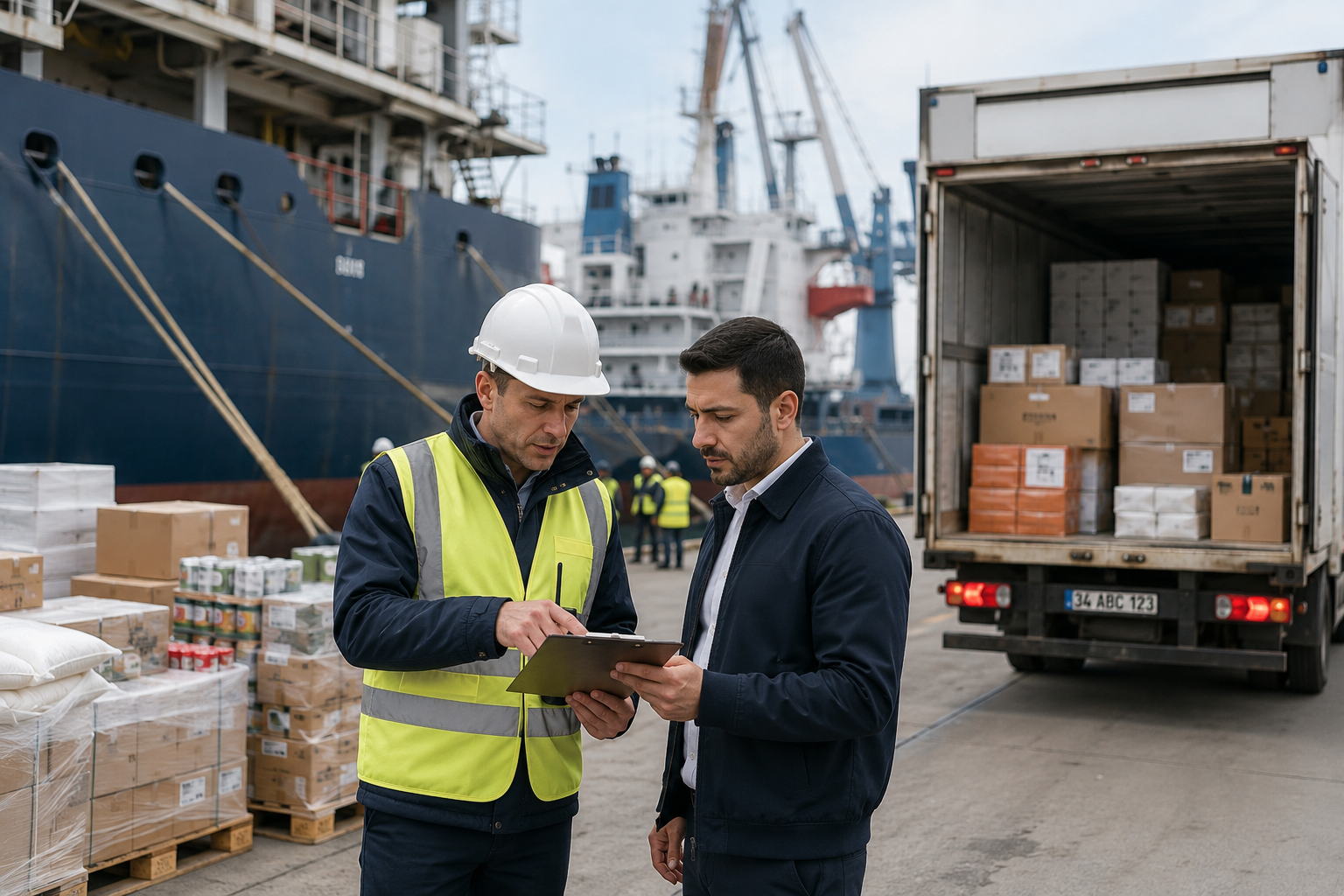
Port Agents and Ship Suppliers: How the Relationship Affects Delivery Success
Ship supply does not end when a supplier prepares the goods. A successful delivery depends on timing, port access, documentation, customs clearance, vessel schedule updates and last-mile coordination. In most ports, the port agent plays a central role in making this happen.
For ship managers, operations teams, port agents and suppliers, strong port agent ship supplier coordination can be the difference between smooth onboard delivery and missed supply.
The supplier may prepare the provisions, technical stores, bonded items or spare parts, but the agent often controls or supports the operational bridge between the port, the vessel, customs, terminal, launch boat, trucking provider and ship manager.
This article explains how the relationship between port agents and ship suppliers affects delivery success, where responsibilities may overlap and what buyers can do to reduce delays.
AVS Global Ship Supply & Catering supports ship managers, vessel operators and procurement teams with global ship supply, provisions, technical stores, bonded stores and coordinated vessel supply solutions across international ports. For wider supply support, visit Global Ship Supply.
For urgent ship supply requests, use Quick Quote.
The Port Agent's Role in Ship Supply
The port agent acts as the local operational representative for the vessel, owner, operator or charterer during a port call. In ship supply, the agent often helps coordinate the port-side conditions that allow the supplier to deliver goods to the vessel.
The agent’s exact responsibilities may vary by port, vessel, contract and local regulation. However, in most ship supply operations, the agent can influence delivery timing, access permissions, customs coordination and communication with the vessel.
What the Port Agent Typically Supports
In a ship supply delivery, the port agent may support:
- Vessel ETA and ETD updates
- Berth or anchorage information
- Port access instructions
- Terminal entry permissions
- Customs or port authority coordination
- Delivery window confirmation
- Launch boat coordination where applicable
- Vessel contact details
- Crew or officer communication
- Delivery documentation flow
- Last-minute operational updates
The supplier may be responsible for sourcing and preparing the goods, but the port agent helps connect the delivery plan to the real port situation.
Why the Agent Matters
Even a well-prepared order can fail if port information is wrong or late. For example, the goods may be ready, but the truck may not enter the terminal without the correct permit. A launch boat may not be available at anchorage. Customs documents may need agent support. The berth may change shortly before delivery.
The port agent reduces these risks by providing local operational visibility.
A good agent helps suppliers answer practical questions such as:
- Where is the vessel actually located?
- Is the vessel at berth, anchorage or OPL?
- What is the delivery cut-off?
- Which gate should the truck use?
- Is a port pass required?
- Are customs documents ready?
- Is launch boat delivery possible?
- Who will receive the goods onboard?
- Has the vessel’s ETA changed?
Without these answers, the delivery plan can quickly become unreliable.
Information Flow: Agent → Supplier → Vessel
Clear information flow is one of the most important parts of successful ship supply. In many cases, delivery problems happen not because goods are unavailable, but because updates do not reach the right people in time.
A strong communication chain connects the buyer, port agent, supplier, vessel, terminal and logistics provider.
The Basic Communication Chain
A typical supply communication flow may look like this:
- Buyer or ship manager sends the supply request.
- Supplier confirms availability, price and delivery plan.
- Port agent confirms vessel schedule, berth and local requirements.
- Supplier prepares goods and transport.
- Agent updates supplier on ETA, berth or anchorage changes.
- Supplier coordinates final delivery timing.
- Vessel confirms receipt.
- Supplier sends delivery documents and invoice.
The process seems simple, but every step depends on accurate and timely updates.
What the Supplier Needs From the Agent
The supplier may need the agent to provide:
- Confirmed ETA and ETD
- Vessel berth, terminal or anchorage position
- Delivery permission requirements
- Port gate details
- Customs instructions
- Local delivery restrictions
- Contact person onboard
- Launch boat availability
- Port health requirements if applicable
- Any change in schedule or delivery window
If the agent does not provide these details early enough, the supplier may prepare the order but fail at the final delivery stage.
What the Agent Needs From the Supplier
The agent also needs clear information from the supplier.
Useful supplier information may include:
- Supplier company name
- Delivery vehicle details
- Driver details where required
- Cargo description
- Quantity and package count
- Weight and dimensions
- Invoice or proforma invoice
- Packing list
- Delivery note
- Customs status
- Dangerous goods information where applicable
- Bonded stores details where applicable
- Requested delivery time
This information helps the agent prepare permits, coordinate terminal access and support customs or port authority requirements.
Why Buyers Should Keep Everyone Aligned
The buyer or ship manager should avoid creating separate information silos. If the supplier receives one ETA and the agent receives another, delivery risk increases.
For urgent supply, the buyer should keep the agent and supplier aligned on:
- Latest vessel schedule
- Order approval status
- Delivery deadline
- Criticality of the goods
- Required documents
- Special handling needs
- Contact persons
The smoother the information flow, the higher the chance of successful delivery.
Berth, Anchorage and Pilot Coordination
Ship supply delivery depends heavily on the vessel’s actual location. A vessel at berth, anchorage or OPL requires different delivery planning.
Delivery at Berth
Berth delivery is usually the simplest option, but it still requires coordination. The supplier may need terminal access, gate permission, vehicle registration, PPE compliance and a defined delivery time.
Key questions include:
- Which terminal is the vessel at?
- Which berth number applies?
- What is the truck gate?
- Does the driver need a port pass?
- Is terminal escort required?
- Is crane or forklift support needed?
- Who will receive the delivery onboard?
- What is the latest delivery time before departure?
Even at berth, last-minute berth changes can create delays if the supplier is not updated.
Delivery at Anchorage
Anchorage delivery is more complex. Goods may need to be transferred by launch boat or service boat. This requires coordination between the agent, launch operator, supplier, vessel and port authority.
For anchorage delivery, the team must clarify:
- Is launch boat delivery allowed?
- Who books and pays for the launch boat?
- What is the maximum cargo weight and volume?
- Can the launch boat carry provisions, spares or bonded stores?
- Are dangerous goods permitted?
- Is customs clearance completed?
- What time is the vessel available to receive goods?
- Are weather and sea conditions suitable?
Anchorage delivery can be successful, but it requires earlier planning than berth delivery.
OPL Delivery
OPL means “Outer Port Limits.” OPL delivery usually refers to delivery outside the main port area, often by launch boat or service craft. It may be used when the vessel is not entering port or when delivery is needed before or after a port call.
OPL delivery can be useful for urgent supply, but it may involve additional cost, permits, weather limitations and coordination requirements.
A buyer should not assume OPL delivery is always possible. The agent and supplier must confirm local rules, boat availability, customs conditions and safety limitations.
Pilot and Schedule Coordination
Pilot timing can also affect delivery. If the vessel is waiting for a pilot, shifting berth or preparing to sail, the delivery window may become very short.
The agent’s updates help the supplier understand whether there is still time to deliver or whether the goods should be redirected to another port.
Customs, Port Health and Documentation
Documentation is one of the most common causes of ship supply delays. The goods may be ready, but delivery can fail if customs, port health or terminal documents are incomplete.
The agent often supports or coordinates the local documentation process, while the supplier provides shipment and product documents.
Common Documents in Ship Supply Delivery
Depending on cargo type and port rules, the following documents may be needed:
- Commercial invoice
- Packing list
- Delivery note
- Proforma invoice
- Customs declaration
- Bonded stores declaration
- Certificate of origin where applicable
- Health certificate where applicable
- Safety Data Sheet for chemicals
- Dangerous goods declaration where applicable
- Vehicle and driver details
- Port entry permit
- Vessel acceptance confirmation
- Agent instruction or authorization
Not every delivery requires every document. The required set depends on the port, cargo category and customs status.
Port Health and Provisions
For provisions, port health requirements may apply, especially for fresh food, frozen goods, meat, dairy or controlled food products.
The supplier and agent may need to coordinate:
- Food safety documents
- Health certificates
- Temperature records
- Product origin information
- Inspection timing
- Port health approvals
- Vessel delivery permission
If port health requirements are not checked early, provisions delivery can be delayed or rejected.
Chemicals and Dangerous Goods
For chemicals or dangerous goods, documentation must be handled carefully. Safety Data Sheets, labeling, packaging and transport rules may be required.
The supplier should provide SDS and product details early. The agent can then check whether port or terminal restrictions apply.
For chemical-related guidance, procurement teams should ensure documents are reviewed before dispatch, not after the truck arrives at the gate.
Bonded Stores
Bonded stores often require stronger documentation control. The agent may need to coordinate with customs or port authorities before delivery.
Typical bonded-related checks include:
- Product list
- Quantity declaration
- Customs status
- Vessel entitlement or approval where applicable
- Delivery record
- Controlled handover
- Port-specific restrictions
Because bonded goods may be sensitive to customs rules, buyers should not leave documentation to the last minute.
Last-Mile Delivery Logistics
The final stage of ship supply delivery is often the most fragile. Goods may already be sourced, packed and transported to the port, but last-mile execution determines whether they actually reach the vessel.
Truck Delivery to Port
For berth delivery, the truck must reach the correct terminal gate at the correct time with the correct documents.
Common truck delivery issues include:
- Wrong terminal or berth information
- Driver not registered in advance
- Missing port pass
- Vehicle not allowed inside terminal
- Cargo not cleared by customs
- Delivery arriving outside permitted hours
- No receiving officer available onboard
- Package count mismatch
- Missing delivery note
These issues can be avoided through early coordination between the supplier and agent.
Launch Boat Delivery
Launch boat delivery requires additional planning. The supplier may need to deliver goods to a pier, launch station or service boat location instead of the vessel directly.
Important checks include:
- Boat booking
- Cargo size and weight limit
- Loading point
- Weather conditions
- Sea state
- Vessel position
- Customs clearance
- Receiving crew availability
- Safety rules for transfer
If the goods are heavy, fragile, temperature-sensitive or dangerous, launch delivery may require special handling or may not be suitable.
Temperature-Sensitive Goods
For provisions, frozen products or medical items, last-mile timing is critical. A delay at the port gate or launch station can break the cold chain.
The supplier and agent should align on:
- Delivery window
- Cold storage availability
- Reefer truck or insulated packaging
- Temperature log documentation
- Fast handover process
- Vessel storage readiness
For ship supply, cold chain control does not stop at the warehouse. It continues until the goods are accepted and stored onboard.
Proof of Delivery
Proof of delivery should be clear and complete. It may include:
- Signed delivery note
- Vessel stamp
- Receiver name and rank
- Date and time
- Quantity confirmation
- Photos where useful
- Exception notes
- Temperature log where applicable
Good proof of delivery protects the buyer, supplier, agent and vessel team if a dispute arises later.
Conflict Resolution When Things Go Wrong
Even with strong planning, ship supply delivery can still face problems. Vessels change berth, customs clearance is delayed, drivers miss the gate, launch boats become unavailable or goods are rejected onboard.
The difference between a small issue and a failed delivery is often how quickly the agent, supplier and buyer respond.
Common Conflict Scenarios
Typical conflict situations include:
- Vessel berth changes after truck dispatch
- Goods arrive after terminal cut-off
- Customs clearance is not completed
- Driver is denied port access
- Agent and supplier have different delivery instructions
- Vessel says goods were not received
- Supplier claims delivery was completed
- Launch boat is cancelled due to weather
- Bonded goods are missing required documents
- Provisions are rejected due to quality or temperature issue
These situations require fast, factual communication.
How to Resolve Delivery Conflicts
A practical conflict resolution process should include:
- Confirm the latest vessel position and schedule.
- Check whether goods are still deliverable before departure.
- Identify the exact cause of delay.
- Share documents, photos and delivery records.
- Confirm whether customs or port authority action is needed.
- Decide whether to deliver, hold, return or redirect goods.
- Agree who bears extra cost based on responsibility.
- Document the final outcome.
The port agent can help clarify local facts. The supplier can confirm cargo status. The buyer or ship manager can decide whether the delivery should continue, be redirected or cancelled.
Preventing Future Issues
After a delivery problem, procurement and operations teams should review what happened and update the process.
Useful improvement actions include:
- Add agent to earlier communication
- Confirm delivery permits before dispatch
- Create port-specific delivery checklists
- Improve document cut-off rules
- Record launch boat limitations
- Track supplier delivery performance
- Keep vessel contact details updated
- Define escalation contacts
- Store proof of delivery properly
The goal is not only to solve the current problem, but to reduce the chance of repeating it.
How AVS Supports Port Agent and Ship Supplier Coordination
AVS supports ship managers, port agents and procurement teams by coordinating vessel supply requirements across multiple ports and categories.
AVS can support:
- Global ship supply coordination
- Provisions supply
- Technical stores
- Bonded stores
- Marine chemicals
- Delivery planning
- Supplier communication
- Agent coordination
- Port delivery timing
- Multi-port supply support
- Documentation support
- Urgent ship supply requirements
Strong coordination between agent, supplier and vessel team helps reduce missed deliveries, documentation issues and last-mile delays.
For ship supply requests, use Quick Quote.
Conclusion: Delivery Success Depends on Coordination, Not Only Supply
In ship supply, the supplier’s role is essential, but delivery success often depends on the port agent relationship. The agent helps connect the supply plan to real port conditions: berth, anchorage, customs, access permits, launch boats, vessel timing and documentation.
For ship managers and operations teams, the best approach is to involve the agent early, give suppliers clear delivery details and keep all parties updated when vessel schedules change.
A successful delivery is not only about having the goods ready. It is about aligning the right product, right documents, right port access, right timing and right communication.
AVS Global Ship Supply & Catering supports coordinated ship supply across international ports, helping procurement teams manage vessel requirements with stronger visibility and fewer delivery surprises.
FAQ
Who is the port agent in ship supply?
The port agent is the local representative who supports the vessel during a port call. In ship supply, the agent may help coordinate vessel schedule updates, port access, customs requirements, berth information, launch boat arrangements and communication between supplier and vessel.
Does the agent or the supplier book the truck?
This depends on the port, agreement and delivery scope. In many cases, the supplier arranges the truck, while the agent supports port access, delivery permission and local instructions. The responsibility should be clarified before dispatch.
Can a supplier deliver without an agent?
In some ports, yes. In others, the agent may be needed for access permits, customs coordination, terminal entry or launch boat arrangements. Buyers should confirm local port requirements before assuming direct delivery is possible.
What documents does the agent need from the supplier?
The agent may need invoice, packing list, delivery note, cargo description, vehicle and driver details, customs documents, bonded stores details, Safety Data Sheet for chemicals or port-specific forms depending on the delivery.
Who pays the port dues for ship supply delivery?
Payment responsibility depends on the port, service type, agency agreement and supply contract. Port dues, launch boat costs, storage, customs fees or terminal charges should be clarified before delivery.
How does the agent influence delivery timing?
The agent provides vessel ETA, berth, anchorage position, pilot updates, terminal access instructions and delivery restrictions. These updates directly affect when the supplier can deliver.
What if the vessel berth changes last minute?
If the berth changes, the agent should update the supplier and buyer immediately. The supplier may need to redirect the truck, update gate instructions or change the delivery time.
Can AVS work directly with multiple port agents?
AVS can coordinate with port agents, ship managers, vessel operators and procurement teams across international ports to support vessel supply planning and delivery execution.
What is OPL delivery?
OPL delivery means delivery at Outer Port Limits, usually outside the main port area. It may involve launch boat or service boat coordination and depends on local rules, weather, customs and vessel position.
Is delivery by launch boat possible at anchorage?
Launch boat delivery may be possible at anchorage, but it depends on port rules, customs status, weather, cargo type, cargo weight and launch availability. The agent should confirm feasibility in advance.
How does the agent affect customs clearance?
The agent may support customs communication, vessel documentation, local forms, delivery authorization and coordination with authorities. The supplier must still provide accurate cargo and invoice documents.
Should the buyer copy the agent on every RFQ?
The buyer does not always need to copy the agent on early RFQs. However, once delivery timing, port access, customs or launch boat coordination becomes relevant, the agent should be included early enough to prevent last-minute issues.